

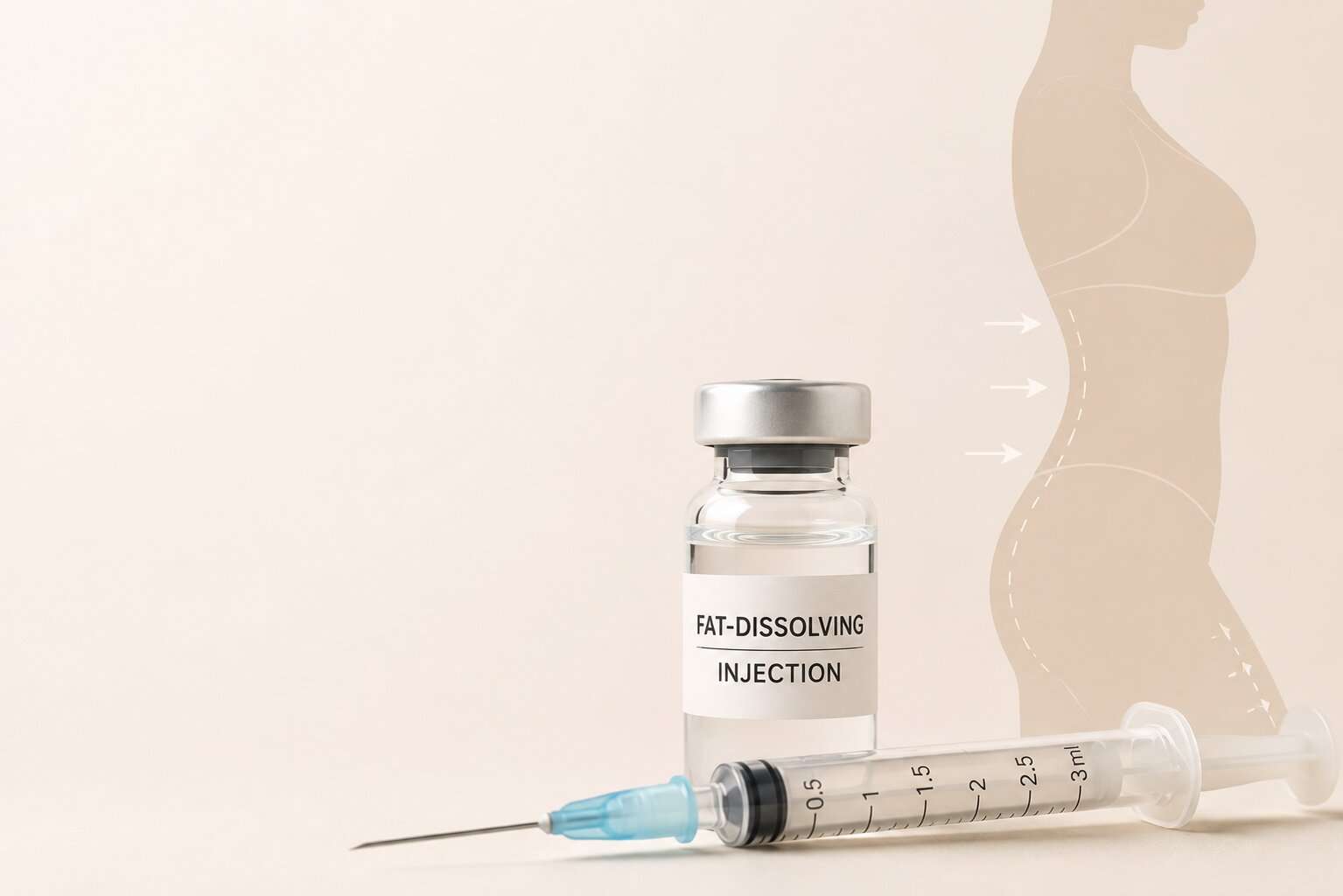
Fat-dissolving injections are now the most popular non-surgical treatment for stubborn fat. Patients wonder whether they actually work and how they are different from other treatments. This guide explains the scientific principles, findings, and what to expect.
Fat-dissolving injections involve compounds that destroy fat cells, such as deoxycholic acid. Deoxycholic acid is a naturally occurring molecule that breaks down food fats. The injection breaks down the membrane of fat cells in the area. The body then eliminates the damaged cells in its own way, through its natural lymphatic system. This will usually take several weeks. The effects of these results gradually take place as the body gets rid of the dissolved fat.
People look for fat burning injections, which they hope will lead to weight loss. These are not fat-dissolving injections. They work on localized fat pockets, not overall body fat. Weight-loss injections, similar to GLP-1 drugs, work systemically by suppressing hunger and metabolic rate. Fat-dissolving injections are effective only on the area where they are injected. They will not make you lose fat elsewhere to slim your waistline. People may confuse the two, leading to false expectations.
So do fat burning injections work? Not in the way most people expect. They do not burn calories or speed up metabolism. Think of a fat-dissolving injection as a shot that dissolves fat in one specific spot, not a fat burner for the whole body.
Research studies show they can visibly reduce fat in treated areas. Most patients see a visible reduction in fat after completing the full course of treatment. The number of treatments, the area treated, and the dosage will influence effectiveness.
Clinical trials for fat under the chin show over a 70% success rate with visible results. The treatment is usually done in 2 to 4 sessions, which are spaced 4 to 6 weeks apart. Every session eliminates a certain amount of fat cells within the treated area. Once fat cells are destroyed, the result is permanent because fat cells do not regenerate after destruction.
Fat dissolving injections outline the small, stubborn areas. They are not a replacement for diet, exercise, or weight-loss therapy. This treatment will not create significant weight loss in patients with excess weight. It's best suited for individuals near their ideal weight who have stubborn fat in specific areas.
Fat-dissolving injections are most effective in small, well-defined fat deposits. It is not the best treatment for larger areas of loose skin.
The most commonly researched and FDA-approved use case is under the chin or submental area. Another popular option for reducing jowls is jawline contouring. Small doses are needed on the face because it has the most sensitive tissue and is close to nerves.
The abdomen, thighs, and flanks are often used off-label in aesthetic practices. These zones often require more frequent treatment and larger volumes. Effective results here vary more, as storage areas of the body are usually bigger than the face.
Good candidates are close to their ideal body weight. They should have localized pockets of fat that are not affected by diet and exercise. Skin elasticity is also important, as no injections can tighten loose skin. There are other options for patients who are trying to shed a lot of pounds. It also may not be suitable for certain medical conditions such as bleeding disorders.
Treatment times are dependent on patient objectives and area size.
Visible results are achieved after 2–4 sessions. The requirements for larger areas, such as the abdomen, may be up to six sessions. One to three sessions are usually administered every 4- 6 weeks to allow complete recovery between treatments.
The results are often not apparent for the first two weeks, as there is initial swelling. Typically, visible fat loss will occur around 6-8 weeks after every session. Results of a treatment course may take 3-4 months to develop fully.
Kybella is the FDA-approved deoxycholic acid formula available in the US. In Korea, deoxycholic acid is used to prepare a variety of fat-dissolving injections in varying concentrations. Several Korean formulas combine other components, such as phosphatidylcholine, to increase fat metabolism. Regulatory approval varies between different markets: Kybella has FDA clearance; formulating for the Korean market usually involves KFDA or CE clearance. Buyers and clinics should verify which certification applies to their region.
Liposuction is a surgical procedure lasting 1-2 weeks under general anesthesia to remove fat. Fat-dissolving injections are non-surgical, require no anesthesia, and have minimal downtime. Injections have less risk of side effects such as scarring or an irregular shape in smaller areas. Liposuction is more effective when the amount of fat is greater, but it also involves a greater risk of surgery. Injections are typically the simplest and safest treatment for small areas.
There are several treatments available to reduce fat without the need for injections.
CoolSculpting employs a process called cryolipolysis, which is used to freeze fat cells to cause them to die naturally. Unlike fat-dissolving injections, it does not necessitate needles. CoolSculpting sessions take about 35 to 60 minutes per area. Results can sometimes take a little longer to be seen, usually 2-3 months. The two treatments permanently destroy fat cells, but small areas such as the chin can be targeted with injections.
In general, fat-dissolving injections are safe when performed by a trained practitioner.
The most common side effects are swelling, bruising, and numbness. These tend to improve within 1-2 weeks following each session. Some patients experience temporary hardness or lumpiness in the treated area. Rare side effects include nerve damage, which can cause a temporary imbalance in facial expressions.
Kybella is FDA-cleared for the specific purpose of treating submental fat. CE marking is used with European-compliant formulations, and generally, these may be formulated to be effective on a wider area of treatment. When buyers search for clinics, they should check whether the certificate matches the treatment area and the target market's regulations.
The results and safety depend on the provider. Look for a doctor who has received a license and special training to perform fat-dissolving injection treatment. Inquire about the number of treatments they have done and ask to see before-and-after photos. Verify key formulations and certification. Don't rely on providers that charge a lot less for products, which suggests weak or unchecked usage.
If you are wondering where can I get fat-dissolving injections, start with board-certified dermatologists or licensed medical aesthetic clinics. Verify the provider uses an approved formulation, such as Kybella or a certified Korean equivalent, before booking a consultation.
A session will give a good result but seldom achieve complete contouring. Providers recommend sessions to be typically 4 to 6 weeks apart. This will give the body enough time to expel any dissolved fat that was released. Two rounds in a week are not suggested, as it raises the risk of side effects.
Results are considered permanent for the fat cells destroyed during treatment. Fat cells can't be replaced, so they usually have lasting results. Even if you've gained a lot of weight, there may still be fat cells left to grow.
Yes, there are clinics that do fat injection and tightening with skin-firming procedures such as radiofrequency. This will deal with both fat and skin looseness at the same time. Full facial rejuvenation treatments are also frequently combined with dermal fillers.
Fat dissolving injections are a genuine, non-surgical way to treat small, stubborn fat pockets. They do not act like weight-loss injections and don't replace dieting or exercise. Most patients can expect to see contouring results that are visible and durable in a few months with a qualified provider who has realistic expectations.
Fat-dissolving injections are now the most popular non-surgical treatment for stubborn fat. Patie
READ FULLBelotero Dermal Filler vs Juvederm: Key Differences Explained Belot
READ FULLA proper daily skincare routine is essential for maintaining healt
READ FULL

Have a question or need a quote? Fill out this form and our team will get back to you quickly!