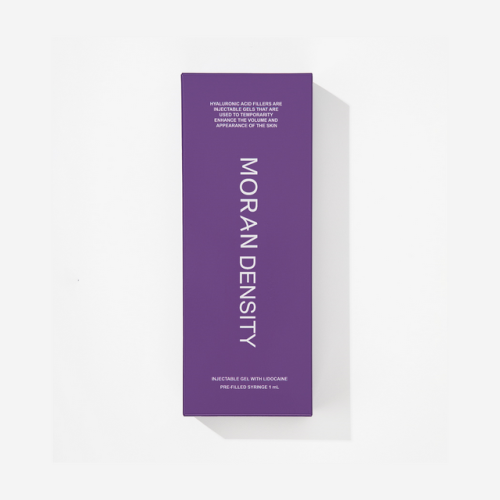
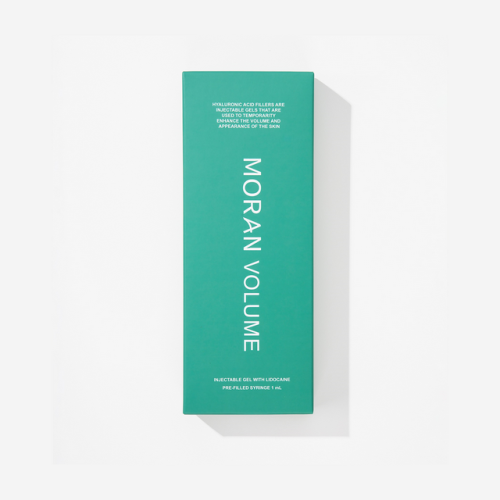
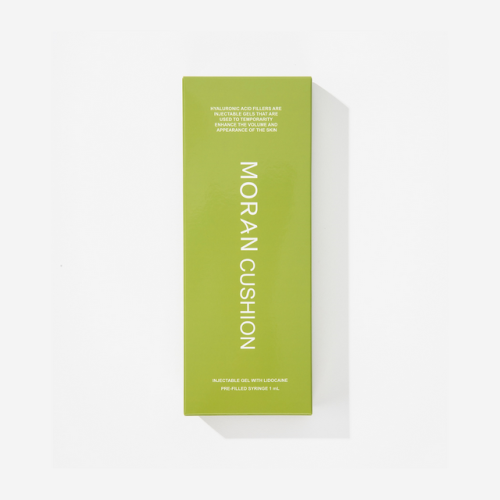
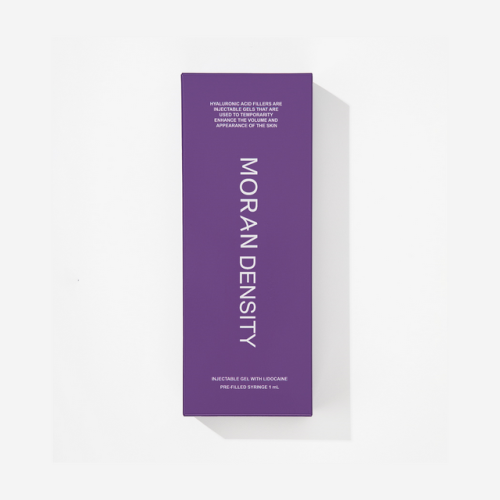
1ml Luer Lock syringe with needle, ideal for precise injection of hyaluronic acid dermal fillers and mesotherapy treatments.
Quick Info

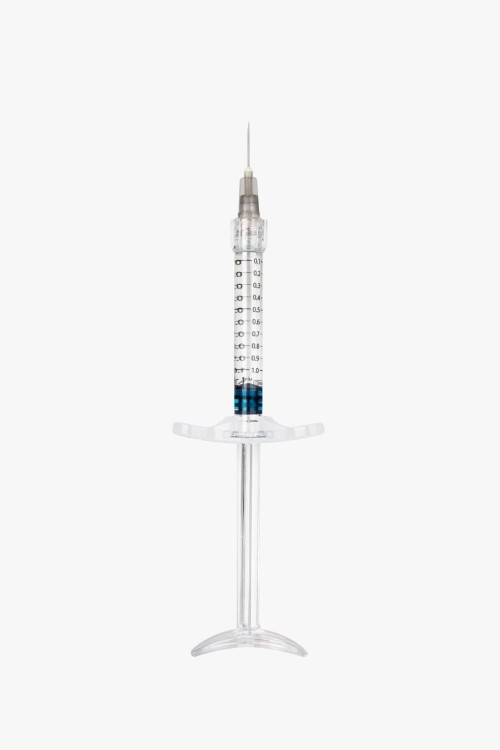

1ml Luer Lock syringe with needle, ideal for precise injection of hyaluronic acid dermal fillers and mesotherapy treatments.
Quick Info


SebomBio is a hyaluronic acid filler supplier manufacturing in Korea. Our Korean HA fillers, sold under the MORAN name, are CE certified and regulated by Korea's MFDS. We sell wholesale hyaluronic acid filler to licensed clinics, med spas and distributors only, and every certificate behind the product can be checked before you order.
| Specification | MORAN HA filler |
|---|---|
| Active material | Cross-linked hyaluronic acid (HA) |
| Cross-linking agent | BDDE |
| HA concentration | 20 and 24 mg/mL across the range; the figure for each SKU is printed on its label |
| Anesthetic | 0.3% lidocaine in every syringe |
| Gel profiles | Cushion (softer), Volume (mid-density), Density (firmest) |
| Formats | 1 mL and 10 mL pre-filled syringes, 50 mL bulk vial |
| Typical duration | 6–12 months, depending on treatment area and patient |
| Regulatory | CE certified; Korean MFDS regulated |
Indications, injection depth and contraindications are defined in each product's instructions for use. For MOQ, packing, shipping and payment terms, see our dermal filler wholesale terms.
Natural hyaluronic acid is broken down by the body within days. Cross-linking with BDDE binds the HA chains into a gel that persists for months, and that gel is what a hyaluronic acid filler actually is. Three variables then decide how it behaves in tissue:
That is why the Cushion, Volume and Density gels exist as separate products: one gel cannot be both soft enough for superficial lines and firm enough for deep support. The 0.3% lidocaine reduces discomfort during injection and does not change how the gel behaves.
HA is also reversible. Hyaluronidase breaks down hyaluronic acid, so a clinician can dissolve HA filler if a correction needs adjusting. Other filler materials have no equivalent, well-established reversal, which is one reason clinics stock HA for first-line treatment. SebomBio manufactures HA only.
Residual BDDE, the unreacted cross-linker left after purification, is a quality marker worth asking about. Request the manufacturer's documentation for the SKU you plan to stock.
A CE mark on an HA filler is not a label claim. Injectable HA gel is an implantable medical device, and under the EU Medical Device Regulation (MDR 2017/745) dermal fillers of this type typically fall in Class III, the highest risk class. A manufacturer cannot self-certify a Class III device. An independent notified body must audit the quality system and assess the technical file, including clinical evaluation, before it issues the certificate.
So a CE certified hyaluronic acid filler comes with documents you can inspect:
How to check a CE certificate before you buy
We supply the CE certificate and the supporting documents with your quotation. CE allows sale in the European market only. Registration in other countries is a separate process, so tell us your destination and we confirm which documents apply.
Korean HA fillers are regulated by the Ministry of Food and Drug Safety (MFDS), Korea's medical device authority. MORAN is manufactured in Korea and regulated by MFDS, so it sits under the regulator of the country where it is made, and that status is a separate check from CE.
For a buyer, the two work together but do not replace each other. MFDS covers the Korean regulatory standing of the product. CE covers European conformity under MDR. Neither automatically grants registration in your own country. When you compare Korean HA fillers from different suppliers, ask each one for both documents.
As a hyaluronic acid filler supplier selling direct from the manufacturer, we also supply licensed hospitals. Send your destination country, the gel profiles and formats you plan to stock, and your business license details through our contact page.
Not all of them, and no. MFDS regulation covers the Korean market, while CE is a separate certification issued by an EU notified body under MDR. MORAN is both MFDS-regulated and CE certified. Neither replaces your own country's registration, so ask any supplier for the CE certificate itself, not just a statement.
The CE certificate naming the notified body, certificate number, scope and validity date, plus the declaration of conformity and the instructions for use. We supply them with your quotation, and you can check the notified body in the NANDO database.
BDDE (1,4-butanediol diglycidyl ether) is the cross-linker that turns HA into a durable gel. Purification removes unreacted BDDE, and the residual level is a quality marker you can ask about.
MORAN typically lasts 6–12 months. Duration depends on the treatment area, the gel profile and the patient.
Yes. Hyaluronidase breaks down hyaluronic acid, so a clinician can reverse HA filler treatment. Other filler materials have no equivalent, well-established reversal.
Concentration is one variable among several. Cross-linking, particle size and cohesivity affect lift and spread as much as mg/mL does, so choose by the gel profile and the treatment area, and use the label figure for the SKU you order.


Have a question or need a quote? Fill out this form and our team will get back to you quickly!
 Categories
 Popular Product